
Guide
Daytime porters and night crews in San Mateo, compared
A day porter keeps an occupied building presentable while people are in it; nightly janitorial service cleans the building thoroughly once they leave. Most busy Peninsula properties end up deciding how much of each they need.
Two kinds of cleaning on two different clocks
Picture a multi-tenant office building in downtown San Mateo late in the morning. Tenants are arriving for meetings, a courier has tracked rainwater across the lobby, and the restroom on the second floor has run out of paper towels. Nobody in that building can wait for the evening crew; the lobby needs attention now. That is porter work.
Now picture the same building well after dark. The offices are empty, the lobby is quiet, and every desk, restroom and floor can be cleaned without working around anyone. That is janitorial work. The two services answer different questions: one is about how the building looks while it is in use, the other is about how it is restored after use.
In practice, a day porter is a cleaner assigned to the hours when a property is open and occupied. Janitorial staff, in the usual sense, arrive after hours and carry out the full list of scheduled room tasks. Both are cleaners; what separates them is timing, task list and pace.
What a day porter handles
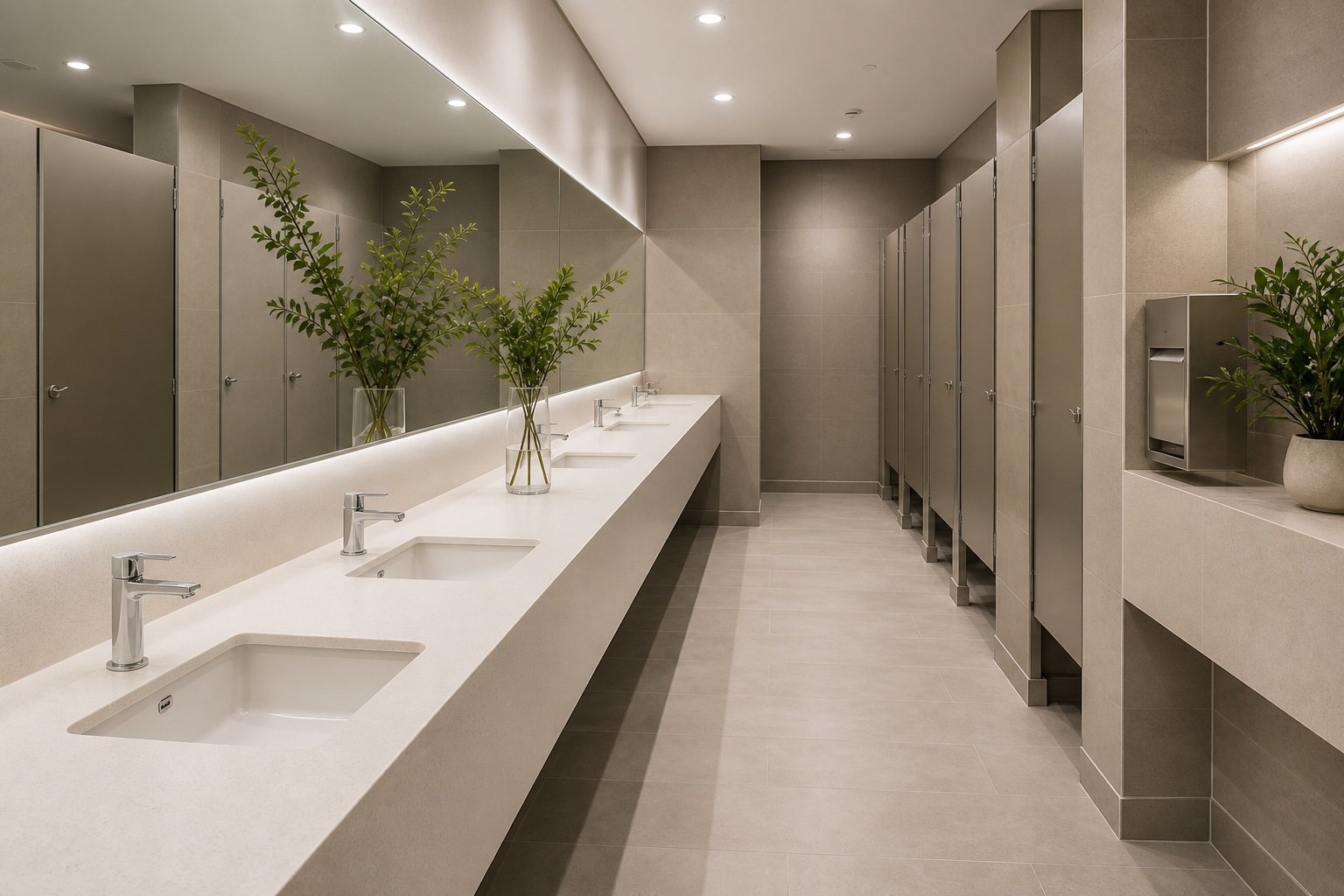
Porter work is responsive and visible. A porter moves through the property in loops, checking entrance glass, lobby floors, restroom fixtures and supplies, shared counters and bins. Spills are cleaned the moment they happen, bins are emptied before they become a complaint, and restrooms are refreshed between rushes.
Because people are present, porter tasks are the kind that can be done quickly and without fuss in an occupied room. A porter wipes, tidies, restocks and spot-cleans; it would make little sense to close a busy corridor to mop its full length or to move furniture in an office where someone is on a call. The day porter service page explains how rounds are timed around a building’s peaks.
What nightly janitorial covers
After-hours cleaning is where the complete scope gets done. Restrooms are cleaned top to bottom, desks and workstations receive their surface cleaning, kitchens are reset, floors throughout the building are vacuumed or mopped, and waste is collected from every room rather than only the busiest ones.
Working in an empty building lets the crew follow an efficient sequence and reach rooms that are occupied all day, such as private offices and conference rooms. Recurring janitorial services run in the evening, overnight or on weekends, matched to the hours when the building actually stands empty.
Periodic tasks belong on this side of the schedule as well. Floor treatments and carpet extraction need rooms to stay closed while they dry, which only an after-hours visit can provide.
Which buildings suit each
A small professional office that is quiet during the day and closed in the evening is usually well served by nightly janitorial alone. Its rooms see moderate traffic, nothing urgent piles up by midday, and the evening visit leaves the office ready for the next morning.
Buildings with heavy public traffic tell a different story. Hotel lobbies along the Burlingame bayfront, campus entrances in Foster City, storefronts around the Millbrae transit hub and medical buildings with full waiting rooms (see between-visit cleaning in a medical practice) all gather fingerprints, spills and litter long before closing. For these properties, a porter decides whether the lobby still looks cared for at noon. Hotel and hospitality cleaning often pairs porter rounds in guest areas with the overnight clean.
Some properties fall in between, with one sharp rush each day. A shorter porter shift built around that peak, such as morning arrivals in a building whose lobby fills all at once, often gives the coverage needed without staffing a full day.
Running both services on one plan
When a building uses both services, the two schedules are drawn up side by side so the tasks divide cleanly. The porter keeps occupied rooms presentable and handles anything that cannot wait, while the night crew carries out the detailed cleaning the porter leaves alone. Nothing gets cleaned twice, and no task is left without an owner.
The walkthrough included with every quote is the place to work this out. Walking the property shows where traffic concentrates, which rooms are occupied at which hours, and how much of the cleaning has to happen while people are present. Properties in San Mateo and the neighboring Peninsula cities use that visit to settle the balance between porter hours and evening visits.
A few useful answers
Quick answers.
Can a building start with nightly janitorial and add a porter later?
Yes. Porter hours can be added to an existing janitorial plan once traffic patterns show where daytime help is needed.
Does a porter take the place of the evening clean?
A porter adds daytime attention on top of the evening clean. Detailed restroom, floor and office work stays with the after-hours visit.
What hours does a day porter work?
Porter shifts follow the building’s busiest periods, from a few hours around one rush to a full working day. Retail and hotel properties often add Saturday and Sunday shifts.
Can porter rounds focus on one floor of a building?
Yes. A route can center on the floor or lobby that carries the most traffic, leaving lighter-traffic floors to the evening visit.
Services