
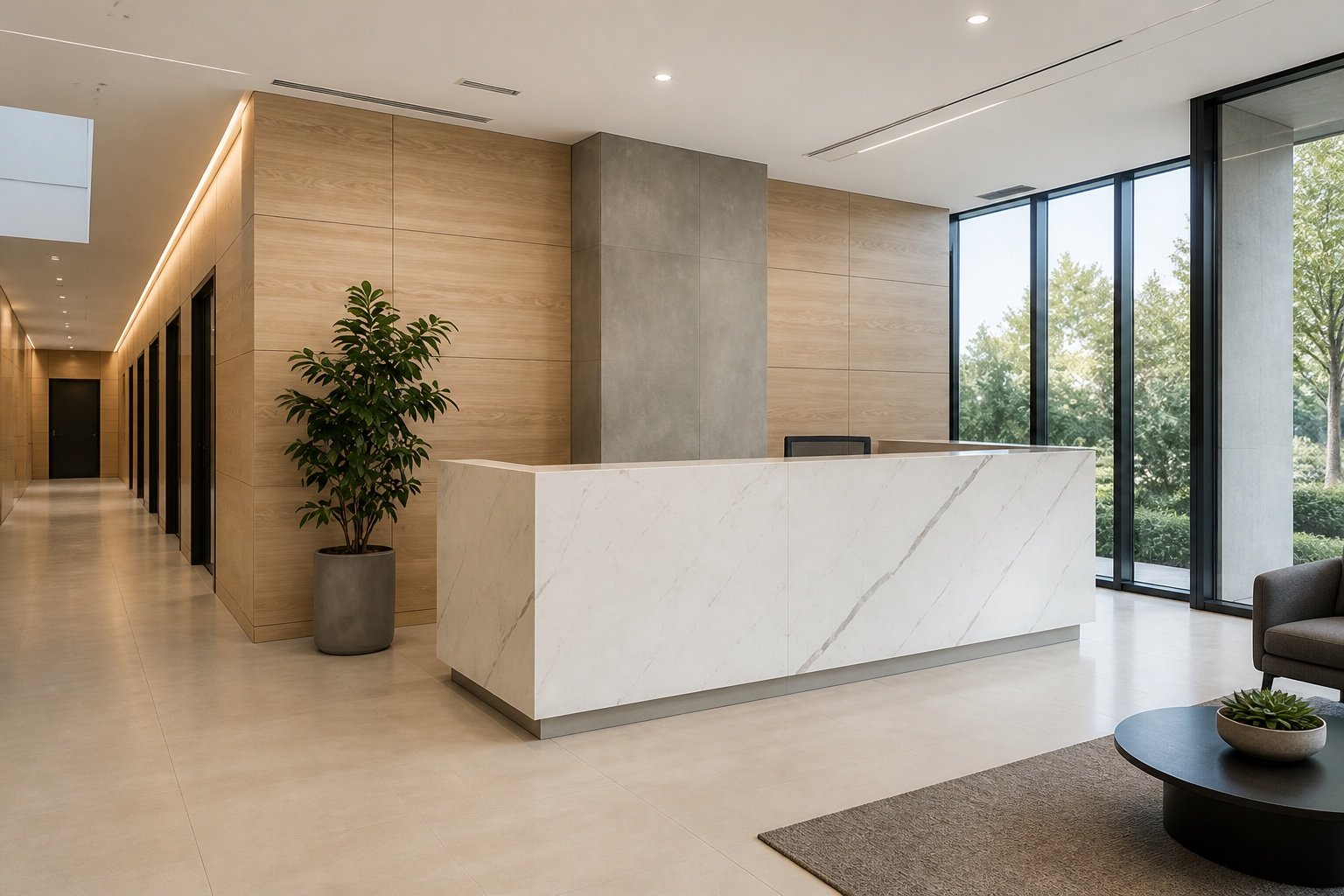
Medical Office Cleaning
Medical office cleaning in San Mateo
Patients notice a clean waiting room and front desk first, so we have those rooms ready before every clinic day in San Mateo. Clinical and terminal cleaning follow your practice’s written room, product and safety procedures.
Patient reception and staff rooms
Waiting areas and administrative offices receive surface and floor cleaning. Restrooms, corridors, and staff breakrooms are attended to throughout the medical interior.
Clinical room cleaning follows the facility’s occupancy rules and work sequence. The room’s surfaces and product requirements determine the cleaning performed around patient-care activity.
We give the rooms you select terminal cleaning that follows the facility’s written protocol.
A clean waiting room and front desk reassure patients the moment they walk in. Those areas are cleaned every visit, with clinical rooms following your own procedures.
Practices that share a building
Medical suites often sit in buildings with other tenants, sharing entries, corridors and restrooms. Those shared areas receive regular commercial care, while the suite itself follows the practice’s own plan, with clinical rooms cleaned under its procedures. Waiting rooms and the front desk are cleaned on every visit.
Administrative offices and staff breakrooms receive the same care as any professional workplace through office cleaning. Practices in Belmont and across the Peninsula can add periodic floor care for waiting room and corridor floors. Carpeted waiting areas can add extraction when traffic leaves its mark.
Exam rooms, procedure rooms and the crew in them
Our crews clean exam and procedure rooms to your practice’s own protocol, from the order of the room to the products on each surface, and give terminal cleaning to any room you book for it. Each cleaner on a medical route is background-checked and trained in bloodborne-pathogen safety.
Disinfecting is done with EPA-registered products, left wet for the full dwell time printed on the label so they can work. Crews also follow HIPAA-aware conduct: charts, files and screens that hold patient records are never read or moved while rooms are cleaned.
How a medical office visit is sequenced
A medical visit starts in the rooms patients see first. Waiting-room seating, side tables and the reception counter are cleaned, entry glass is cleared of fingerprints, and the floor follows once the surfaces above it are done. Administrative offices and the staff breakroom come next.
Clinical rooms are cleaned in the order and with the products the practice’s written protocol sets, and terminal cleaning takes place in the rooms the practice selects. Restrooms and corridors are completed last, so the whole suite is ready for the next day’s first appointment.
Choosing a schedule for a practice
Practices with full patient days benefit from cleaning after each clinic day, because waiting rooms, restrooms and exam rooms all see steady use. A specialty practice that sees patients only on certain weekdays aligns visits with those clinic days and keeps administrative rooms on a lighter rotation.
Weekend visits suit periodic work such as waiting-room carpet extraction and hard-floor treatment in corridors through floor care, since the suite needs to stay empty while floors dry.
What a practice should share
A medical office plan is built from the practice’s own procedures. Having them ready keeps the first visit precise and every later visit consistent with it.
When the practice updates its protocol, the new version replaces the old one from the following visit.
How medical office cleaning costs compare in San Mateo
Medical practices cost more to clean than standard offices. Going by published 2026 rates, a San Mateo practice cleaned five nights a week commonly falls between about $0.19 and $0.38 per square foot each month, against $0.16 to $0.25 for offices. Exam rooms receive detailed disinfection of every touch surface, restrooms see more use by patients, and clinical rooms follow the facility’s own occupancy rules and work sequence, all of which takes more time per square foot.
A 2,800-square-foot dental practice in a downtown medical building, with six operatories, a waiting room and two restrooms, priced at $0.28 comes to $784 a month. A practice that asks for terminal cleaning of specific rooms under its written protocol, or for Saturday service after weekend hours, moves higher; an administrative suite with little patient traffic stays nearer the office band. Patient volume matters too, since a busy pediatric or urgent-care practice soils its waiting room and restrooms faster than a specialty office seeing a few patients an hour. A walkthrough reviews each room’s use before the quote is prepared, and the cost guide compares the medical and office bands.
A few useful answers
Questions about medical office cleaning
Can medical office cleaning include general commercial rooms?
Yes. Offices and common interiors receive general cleaning alongside the facility’s clinical-room work.
Who supplies clinical room procedures?
The medical facility provides its cleaning protocol, including products, patient-occupancy conditions, and safety requirements.
Are waiting room floors included in medical office cleaning?
Yes. Waiting room floor care accompanies cleaning of the other public areas.
Can medical cleaning happen after clinic hours?
Yes. Cleaning can begin once the last patient leaves.
Can a medical suite in a shared building have its own plan?
Yes. The suite can follow its own plan, while shared corridors and restrooms follow the building’s cleaning.
Which Peninsula cities have medical office cleaning?
San Mateo, Burlingame, Belmont, Foster City and Millbrae. In each, we clean waiting rooms, offices and clinical rooms for medical practices.
What is terminal cleaning in a medical office?
Terminal cleaning is a complete cleaning of a clinical room’s surfaces, carried out in the rooms and by the steps the facility’s written protocol sets.
Are restrooms restocked during medical office visits?
Yes. Paper, soap and liners are refilled from the practice’s own supply on each visit.
Can a medical office add a daytime porter?
Yes. Porter rounds keep waiting rooms and restrooms tidy during clinic hours, alongside the evening clean.
Industries
Related industries
Services
Related services
Resources