
Guide
The San Mateo office cleaning checklist, room by room
Recurring office cleaning gives every room in a workplace its own routine. Here is what each room receives on a typical visit, what is scheduled less often, and what to share with the crew.
Printable checklist
Entry and reception
Consider a law office upstairs from Burlingame Avenue, or a young company’s suite in one of the Bay Meadows mixed-use buildings. In both, reception is the room every client sees first in a recurring office cleaning routine, and it receives the first attention on each visit. The front counter and visitor seating are wiped, the entry door glass and sidelights are cleared of handprints, and the waste bin behind the desk is emptied.
Entry mats are vacuumed and the floor beyond them is cleaned, since grit from the sidewalk settles there before it spreads into the rest of the suite. Display shelves, brochure racks and the ledges around the reception desk are dusted wherever they can be reached without moving the company’s materials.
Workstations and private offices
Open-plan desks and private offices receive cleaning of their accessible surfaces. The crew wipes the clear areas of each desk, tucks chairs back in place, dusts ledges and partitions, and empties every waste and recycling bin. Papers, monitors and personal items stay where staff left them; the routine works around a desk instead of rearranging it.
Carpet in work areas is vacuumed, with extra passes along the aisles that carry the most foot traffic. Hard floors under desks and in corridors are swept and mopped. Teams that share hot desks often want those surfaces wiped on every visit, since a different person sits at them each day.
Meeting rooms
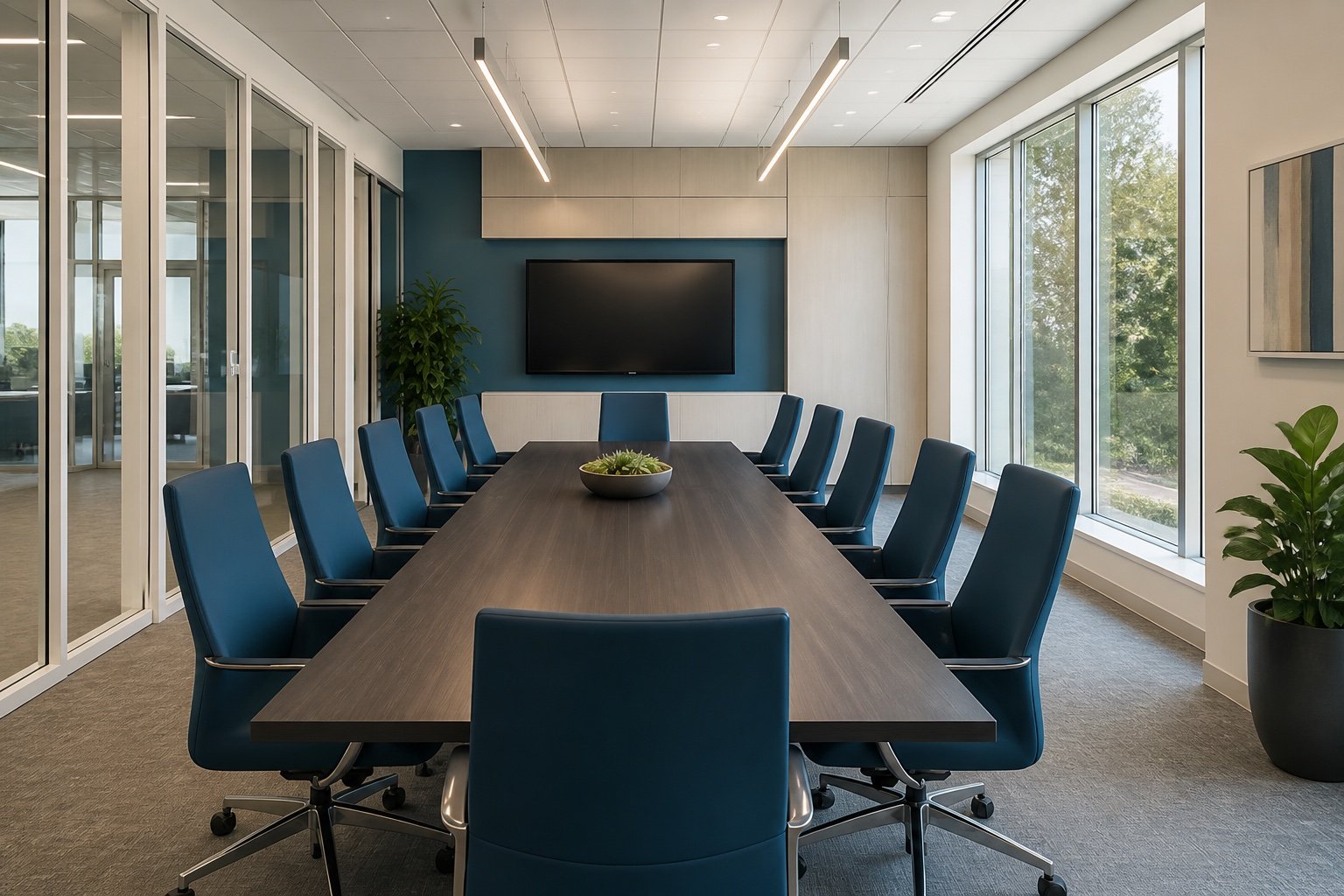
Conference rooms swing between empty and crowded, and a room booked for a client presentation in the morning can be left with cups, markers and crumbs by lunch. On each visit, tables are wiped, chairs are pushed in, whiteboard trays are cleared of marker dust, and the glass walls and door panels common in Peninsula offices are cleared of smudges.
The floor beneath the table receives its own pass, because meeting rooms collect more crumbs than their size would suggest. Offices that host outside visitors in their main conference room give it priority, so it is reset no matter how light the rest of the visit is.
Kitchens, breakrooms and restrooms
The staff kitchen is the hardest-working room in most offices. Counters and tables are wiped, the sink is scrubbed, the fronts of the refrigerator, microwave and coffee machine are cleaned of drips, waste and recycling are removed, and the floor is mopped to lift the spills a quick wipe would miss.
Restrooms receive a full clean on every visit. Toilets, urinals, sinks and mirrors are cleaned, partitions and touch points are wiped, the floor is mopped, and paper, soap and liners are refilled from the office’s own supply. These two rooms shape how staff feel about the workplace far beyond their footprint, which is why they never move to a lighter rotation.
What happens less often
Some work belongs on a periodic calendar rather than in every visit. Hard floors in lobbies and corridors are scrubbed, burnished or recoated once wear starts to show, as the guide on when floors need stripping or extraction explains, and carpeted rooms receive extraction through commercial carpet cleaning when vacuuming no longer lifts the traffic marks.
These treatments are booked for evenings or weekends so rooms can dry before staff return, and they are lined up with the recurring schedule so the office sees one interruption instead of several. Offices with steady daytime traffic can also add day porter service to keep kitchens and restrooms in shape between evening visits.
What to tell the crew
A good office plan starts with what the crew cannot see on its own. The in-person walkthrough before your quote covers the layout, but the office knows which rooms matter most, when the space empties out and which areas are off limits. The Tell the crew section at the end of the printable checklist above is the place to write those answers down before the walkthrough.
Background-checked cleaners follow the access steps your building sets, so share how the crew enters after hours, which badge or alarm steps apply and which doors must stay locked. Offices in Foster City campuses and along Belmont’s El Camino Real often have building rules on top of their own, and both belong in the plan.
A few useful answers
Quick answers.
What parts of a desk get cleaned?
The clear, accessible surfaces of each desk are wiped on every visit. Papers, equipment and personal items are left in place.
Which rooms get attention on every visit?
Reception, kitchens, restrooms and the main meeting rooms are cleaned on each visit, along with waste collection throughout the office.
When should an office add carpet extraction?
Once traffic lanes stay dark after vacuuming, it is time to book extraction. Busy aisles and entry areas usually reach that point first.
Can the cleaning routine change as the office grows?
Yes. Rooms, frequencies and priorities are updated as the office adds staff, floors or new meeting spaces.
Services